

Table of contents
- Marketing 4Ps: Product, Price, Place & Promotion Explained
- What Are the 4Ps of Marketing?
- Who Created the Marketing 4Ps?
- Marketing 4Ps Meaning
- 1. Product: What Are You Actually Selling?
- Questions to Ask About Product
- Product Is More Than Features
- Product Example: SaaS
- Product Mistake: Building What Customers Do Not Want
- Product-Market Fit and the First P
- 2. Price: What Should the Customer Pay?
- Price Communicates Positioning
- Questions to Ask About Price
- Pricing Example: SaaS
- Premium Pricing Strategy
- Discounting Is a Pricing Decision
- Pricing Research
- 3. Place: Where and How Does the Customer Buy?
- Examples of Place
- Questions to Ask About Place
- Place in Digital Marketing
- Place Example: Egyptian FMCG Brand
- Place Example: B2B Business
- 4. Promotion: How Will Customers Discover and Choose You?
- Questions to Ask About Promotion
- Promotion Is Not Only Advertising
- Promotion Example: Local Business
- Promotion Should Follow the Customer
- The Marketing 4Ps Must Work Together
- Marketing 4Ps Example: Coffee Shop
- Marketing 4Ps Example: Real Estate Project
- Marketing 4Ps Example: SaaS Company
- Marketing 4Ps Example: Marketing Agency
- Marketing 4Ps Example: eCommerce Brand
- Marketing 4Ps Example: Restaurant
- How to Use the Marketing 4Ps in Business
- Step 1: Understand the Market
- Step 2: Choose the Target Customer
- Step 3: Define Positioning
- Step 4: Define Product
- Step 5: Define Price
- Step 6: Define Place
- Step 7: Define Promotion
- Step 8: Check Alignment
- Step 9: Measure
- Step 10: Improve
- The 4Ps and Marketing Strategy
- STP and the Marketing 4Ps
- Marketing 4Ps and Digital Marketing
- Digital Product
- Digital Price
- Digital Place
- Digital Promotion
- Digital Marketing Is Mostly Promotion—But Marketing Is Bigger
- Marketing 4Ps vs 7Ps
- 5. People
- 6. Process
- 7. Physical Evidence
- Marketing 4Ps vs 7Ps: Which Should You Use?
- Marketing 4Ps vs 4Cs
- Are the Marketing 4Ps Outdated?
- Common Marketing 4Ps Mistakes
- Mistake 1: Focusing Only on Promotion
- Mistake 2: Treating Price as Finance Only
- Mistake 3: Ignoring Distribution
- Mistake 4: Building Product Without Research
- Mistake 5: Each P Targets a Different Customer
- Mistake 6: Copying Competitors
- Mistake 7: Never Reviewing the Marketing Mix
- How to Audit Your Marketing 4Ps
- A Complete Marketing 4Ps Template
- Marketing Mix Coherence Test
- How the 4Ps Connect With Brand Strategy
- How the 4Ps Connect With Go-to-Market Strategy
- How the 4Ps Connect With Market Research
- How the 4Ps Connect With CRO
- Marketing 4Ps Quick Facts
- Frequently Asked Questions About the Marketing 4Ps
- What are the 4Ps of marketing?
- What does Marketing 4Ps mean?
- What is Product in the 4Ps?
- What is Price in the 4Ps?
- What is Place in the 4Ps?
- What is Promotion in the 4Ps?
- Who created the Marketing 4Ps?
- Why are the 4Ps important?
- Are the 4Ps still relevant in digital marketing?
- What is the difference between marketing mix and 4Ps?
- What is the difference between 4Ps and 7Ps?
- What are the 7Ps of marketing?
- Which is better: 4Ps or 7Ps?
- Is SEO part of the 4Ps?
- Is social media part of the 4Ps?
- Is digital marketing one of the 4Ps?
- Is branding one of the 4Ps?
- Is customer service part of the 4Ps?
- Is packaging part of Product?
- Is distribution the same as Place?
- Is advertising the same as Promotion?
- How do I apply the 4Ps to my business?
- Can the 4Ps be used for B2B marketing?
- Can the 4Ps be used for services?
- Can the 4Ps be used for SaaS?
- What is a simple 4Ps example?
- What comes before the 4Ps?
- What comes after the 4Ps?
- Can Udjat help build a marketing mix?
- How do I start a marketing strategy project with Udjat?
- Conclusion: Marketing Is Much More Than Promotion
- Sources
Marketing 4Ps: Product, Price, Place & Promotion Explained
A company says:
Sales are falling. We need more advertising.
So management increases the advertising budget.
Traffic increases.
Sales barely move.
Why?
Because advertising may never have been the real problem.
Perhaps:
- The product no longer solves the right customer problem.
- The price is wrong for the target segment.
- Customers cannot conveniently find or buy the product.
- The promotional message is weak.
This is exactly why the Marketing 4Ps remain useful.
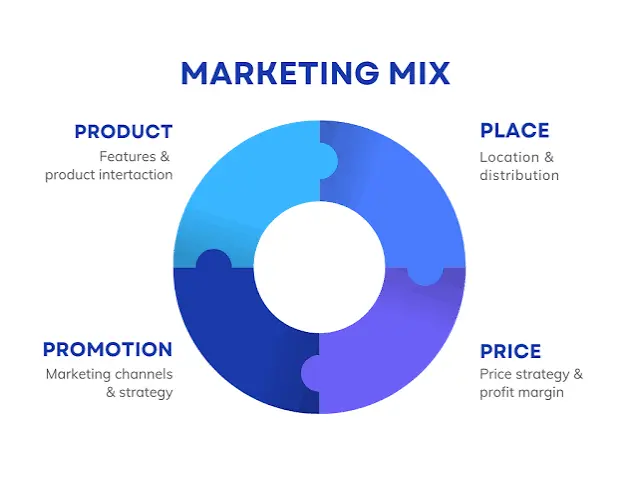
The 4Ps force businesses to examine four fundamental parts of the commercial offer:
Product
↓
Price
↓
Place
↓
Promotion
Together, these four elements are known as the marketing mix.
The American Marketing Association describes the Four Ps as four key factors within marketing strategy: product, price, place and promotion.
At Udjat Agency, we do not use the Marketing 4Ps as a school exercise.
We use the framework to answer a much more important question:
Is every part of the marketing mix supporting the same customer and business strategy?
Because strong promotion cannot permanently rescue:
the wrong product
at:
the wrong price
sold through:
the wrong channel.
What Are the 4Ps of Marketing?
The 4Ps of marketing are:
- Product
- Price
- Place
- Promotion
They form a framework businesses can use to think about how an offer is created, priced, distributed and communicated.
In simple terms:
| Marketing P | Main Question |
|---|---|
| Product | What are we selling and why should customers want it? |
| Price | What should customers pay and why? |
| Place | Where and how can customers buy it? |
| Promotion | How will customers discover and understand it? |
The framework is simple.
Using it well is not.
Each decision affects the others.
A luxury product marketed at a discount price creates tension.
A mass-market product distributed only through difficult-to-access channels creates friction.
A brilliant product nobody knows exists creates no demand.
The four elements need to work together.
Who Created the Marketing 4Ps?
The history of the marketing mix predates the four-letter framework itself.
Neil Borden helped popularize the concept of the marketing mix, describing marketing management as combining multiple commercial ingredients. The American Marketing Association notes that Borden articulated the marketing-mix concept in an AMA presidential address in 1953.
E. Jerome McCarthy subsequently organized the concept into the now-famous four categories—Product, Price, Place and Promotion—in his 1960 book Basic Marketing: A Managerial Approach.
The reason the model remains memorable more than six decades later is simple:
Businesses still need to answer the same four basic questions.
What will we sell?
What will we charge?
How will customers obtain it?
How will we create demand?
Digital technology has changed the answers.
It has not eliminated the questions.
Marketing 4Ps Meaning
The real marketing 4Ps meaning becomes clearer when you stop treating each P as an isolated box.
The framework represents four controllable parts of the market offer.
Product
The value you create.
Price
The value customers exchange.
Place
How that value reaches customers.
Promotion
How customers learn about and understand that value.
A useful shorthand is:
Create Value
→ Product
Capture Value
→ Price
Deliver Value
→ Place
Communicate Value
→ Promotion
That makes the Marketing 4Ps much more useful than memorizing four words for an exam.
1. Product: What Are You Actually Selling?
The first P is Product.
This can be:
- A physical product.
- A service.
- Software.
- SaaS.
- Membership.
- Subscription.
- Experience.
- Professional expertise.
- Digital product.
The core question is:
What customer need are we solving?
A company can become overly focused on features.
Customers usually care more about outcomes.
For example:
A CRM vendor may say:
We offer lead routing, workflow automation, pipelines and reporting dashboards.
The customer may actually want:
Stop losing leads and understand what the sales team is doing.
The product includes the features.
The value is the outcome.
Questions to Ask About Product
Businesses should examine:
- Which customer problem does the product solve?
- Who needs it most?
- Which features matter?
- Which features do not matter?
- What quality level is required?
- How is the product different?
- How is it packaged?
- What experience surrounds it?
- What alternatives already exist?
- Why would customers switch?
- Does the product still match market demand?
These questions should ideally be supported by customer evidence.
That is why Udjat connects Product decisions with Market Research rather than relying only on internal assumptions.
Product Is More Than Features
Consider a restaurant.
Its “product” is not simply:
Food.
It can include:
- Menu.
- Taste.
- Presentation.
- Service.
- Atmosphere.
- Location experience.
- Packaging.
- Delivery.
- Reservation.
- Brand.
Consider a marketing agency.
Its product is not simply:
Marketing services.
It includes:
- Strategy.
- Expertise.
- Follow-up.
- Reporting.
- Account management.
- Creative quality.
- Technology.
- Process.
- Reliability.
Customers buy the total experience.
Product Example: SaaS
Imagine a company launching accounting software for Egyptian SMEs.
Possible product decisions include:
Core Functionality
- Invoicing.
- Expenses.
- Reports.
- Taxes.
- Inventory.
Customer
Small Egyptian businesses.
User Experience
Simple enough for non-accountants.
Localization
Arabic and English.
Support
Local customer service.
Integration
Banks, eCommerce or POS systems where applicable.
Product marketing then asks:
Which of those characteristics are most commercially important to the customer?
Udjat’s Product Marketing Agency Egypt framework connects these decisions with positioning, messaging and go-to-market strategy.
Product Mistake: Building What Customers Do Not Want
A company spends:
EGP 5 million
developing a product.
Then launches.
Customers do not buy.
Management increases advertising.
Still no traction.
The problem may not be promotion.
It may be Product.
This is one reason market research should happen before major product investment where possible.
Marketing cannot permanently manufacture demand for something customers do not sufficiently value.
Product-Market Fit and the First P
The first P should therefore connect with:
Customer
Problem
Value
Product
A useful sequence is:
Research Customer
↓
Identify Need
↓
Design Product
↓
Test
↓
Improve
↓
Scale
Do not reverse it into:
Build
↓
Spend
↓
Hope
2. Price: What Should the Customer Pay?
The second P is Price.
Price is much more strategic than:
Cost + profit margin.
Pricing affects:
- Demand.
- Positioning.
- Profitability.
- Customer perception.
- Sales cycle.
- Market segment.
- Distribution.
- Competitive position.
A price tells customers something about the product.
Price Communicates Positioning
Imagine three watches.
Watch A:
EGP 800
Watch B:
EGP 8,000
Watch C:
EGP 250,000
Even before seeing them, customers form different expectations.
Price influences perceived:
- Quality.
- Exclusivity.
- Risk.
- Accessibility.
That means pricing is partly financial.
And partly psychological.
Questions to Ask About Price
Consider:
- What is the customer willing to pay?
- What value does the product create?
- What do competitors charge?
- What does delivery cost?
- What gross margin is required?
- Should pricing be premium or accessible?
- Should discounts exist?
- Should payment plans exist?
- Monthly or annual?
- Per user or per account?
- Subscription or one-time purchase?
- Does pricing reinforce positioning?
The correct price is not automatically:
Slightly cheaper than our competitor.
Pricing Example: SaaS
A SaaS company could charge:
Flat Monthly Fee
EGP 5,000 per month.
Per User
EGP 500 per user.
Tiered
Starter.
Professional.
Enterprise.
Usage-Based
According to transactions or consumption.
Freemium
Basic product free.
Advanced features paid.
Each creates different:
- Buyer behaviour.
- Revenue economics.
- Sales requirements.
Pricing is part of the business model.
Premium Pricing Strategy
A premium strategy might use:
Higher Price
Higher Product Quality
Premium Brand
Selective Distribution
High-End Communication
All four Ps reinforce one another.
But imagine:
Premium Product
Premium Price
Cheap-looking packaging
Constant 70% discounts
Now the marketing mix contradicts itself.
This is why the four Ps should be considered together.
Discounting Is a Pricing Decision
Discounting can increase short-term demand.
But repeated discounting may teach customers:
Never buy at full price.
That can:
- Reduce margins.
- Weaken premium positioning.
- Change customer expectations.
Promotions should therefore support the pricing strategy rather than undermine it.
Pricing Research
Companies can use research to evaluate:
- Price sensitivity.
- Competitor pricing.
- Value perception.
- Packaging.
- Willingness to pay.
This is especially important when:
- Launching a new product.
- Entering Egypt.
- Entering a premium segment.
- Moving into SaaS subscriptions.
- Changing packages.
Pricing deserves evidence.
3. Place: Where and How Does the Customer Buy?
The third P is Place.
It is sometimes misunderstood because the word sounds like:
Physical location.
But Place means much more broadly:
How does the product reach the customer?
This includes:
- Distribution.
- Retail.
- eCommerce.
- Marketplaces.
- Direct sales.
- Resellers.
- Distributors.
- Branches.
- Applications.
- Websites.
- Delivery.
- Sales channels.
Place is about accessibility.
Examples of Place
A skincare product might be available through:
- Own eCommerce website.
- Pharmacy.
- Amazon.
- Marketplace.
- Beauty retailer.
- Social commerce.
A B2B SaaS company might sell through:
- Website.
- Direct sales team.
- Channel partners.
- Resellers.
A restaurant might sell through:
- Physical branch.
- Website.
- Delivery apps.
- Phone.
- WhatsApp.
Each Place choice affects the commercial model.
Questions to Ask About Place
Ask:
- Where do customers expect to buy?
- Should we sell directly?
- Do we need distributors?
- Should we use marketplaces?
- Which cities matter?
- Does geography matter?
- How quickly can customers obtain the product?
- Does the channel fit the price?
- Who owns customer data?
- Which channel gives the best margin?
- Does buying feel easy?
Convenience can become a competitive advantage.
Place in Digital Marketing
Digital business has made Place more interesting.
A brand can now sell through:
Website
Mobile App
Marketplace
Social Platform
Physical Store
at the same time.
But more channels can also create complexity.
Companies need to consider:
- Inventory.
- Pricing consistency.
- Customer data.
- Fulfillment.
- Attribution.
- Channel conflict.
Omnichannel does not simply mean:
Be everywhere.
It means connecting relevant channels around the customer.
Place Example: Egyptian FMCG Brand
Imagine a beverage company.
Strong awareness alone is useless if:
Customers cannot find the product.
Its Place strategy might include:
- Supermarkets.
- Convenience stores.
- Restaurants.
- Gyms.
- Online grocery.
- Marketplaces.
Advertising creates demand.
Distribution converts that demand into purchases.
This demonstrates why Promotion alone cannot carry the marketing mix.
Place Example: B2B Business
Imagine an international industrial company entering Egypt.
Its Place decision might be:
Direct Sales
Build Egyptian sales team.
or:
Distributor
Use established local distributor.
or:
Hybrid
Direct enterprise sales plus distribution for smaller accounts.
That is fundamentally a marketing decision.
It affects:
- Margin.
- Customer relationship.
- Sales speed.
- Market coverage.
Udjat’s Go-to-Market Strategy Egypt work examines exactly these route-to-market decisions.
4. Promotion: How Will Customers Discover and Choose You?
The fourth P is Promotion.
This is the P businesses frequently mistake for all of marketing.
Promotion includes activities used to:
- Create awareness.
- Communicate value.
- Generate demand.
- Build preference.
- Encourage action.
Examples include:
- Advertising.
- Public relations.
- SEO.
- Social media.
- Content.
- Email.
- Influencer marketing.
- Sales promotion.
- Events.
- Personal selling.
- Digital PR.
- Partnerships.
Promotion answers:
How will the market hear our story?
Questions to Ask About Promotion
Ask:
- Who are we speaking to?
- What do they care about?
- Which message should lead?
- Which proof do they need?
- Where do they spend attention?
- What creates trust?
- Which channels create demand?
- Which channels capture demand?
- What should customers do next?
- How will performance be measured?
Promotion needs both:
message
and:
distribution.
Promotion Is Not Only Advertising
Consider a B2B company.
Promotion might include:
SEO
to capture active searches.
to establish executive authority.
Digital PR
to create third-party credibility.
Google Ads
to capture commercial intent.
to nurture prospects.
Sales Enablement
to help close opportunities.
Promotion becomes a connected communication ecosystem.
Promotion Example: Local Business
A clinic could combine:
Local SEO
Become visible around location-based searches.
Google Business Profile
Support Maps discovery.
Reviews
Build trust.
Google Ads
Capture appointment demand.
Social Media
Educate and build familiarity.
Facilitate communication.
Again:
No single channel is “the marketing strategy.”
They work together.
Promotion Should Follow the Customer
A common mistake is:
TikTok is growing, so our company needs TikTok.
Maybe.
But if your target customer is:
CFOs buying enterprise treasury software
TikTok may not deserve the same priority as:
- Search.
- LinkedIn.
- Industry content.
- Events.
- Sales outreach.
The best promotion channel is the one that fits:
customer + objective + buying journey.
The Marketing 4Ps Must Work Together
This is the most important part of the framework.
Do not optimize each P independently.
Imagine a luxury hotel.
Product
Premium experience.
Price
High.
Place
Exclusive destination.
Promotion
High-quality editorial photography, premium travel media and carefully selected partnerships.
Everything aligns.
Now imagine:
Product
Premium.
Price
Premium.
Place
Premium.
Promotion
Cheap-looking advertisements shouting:
80% OFF!!!! BOOK NOW!!!!
The Promotion contradicts the rest of the mix.
Consistency matters.
Marketing 4Ps Example: Coffee Shop
Imagine a premium coffee shop in New Cairo.
Product
- Specialty coffee.
- Premium ingredients.
- Quiet workspace.
- High-quality service.
Price
Above mass-market coffee shops.
Place
New Cairo location near affluent residential and business areas.
Promotion
- Google Maps.
- Instagram.
- Lifestyle content.
- Local creators.
- Customer reviews.
All four Ps reinforce:
premium contemporary coffee experience.
Marketing 4Ps Example: Real Estate Project
Product
Premium residential development.
Price
High-value apartments with payment plans.
Place
New Cairo.
Also distributed through:
- Direct developer team.
- Brokers.
- Property platforms.
Promotion
- Meta Ads.
- Google Search.
- YouTube.
- Property tours.
- Digital PR.
- Broker network.
The marketing mix needs to support the same target buyer.
Marketing 4Ps Example: SaaS Company
Product
CRM designed for Egyptian real estate sales teams.
Price
Monthly subscription based on team size.
Place
Cloud-based direct subscription plus sales-assisted demos.
Promotion
- Google Search.
- SEO.
- LinkedIn.
- YouTube demos.
- Webinars.
- Partnerships.
Each P supports:
B2B real estate sales teams.
Marketing 4Ps Example: Marketing Agency
Consider Udjat itself as a conceptual example.
Product
Integrated marketing, research, branding, technology and growth services.
Price
Project or ongoing engagement structured around service scope and complexity.
Place
Service delivery to businesses in Egypt and selected regional markets through account teams, digital collaboration and meetings.
Promotion
- SEO.
- Thought leadership.
- Case studies.
- Digital PR.
- Social media.
- Search.
- Industry content.
- Awards and partnerships.
The key question remains:
Does every P reinforce the position the agency wants to occupy?
Marketing 4Ps Example: eCommerce Brand
Product
Premium fitness clothing.
Price
Mid-to-premium.
Place
- Own website.
- Marketplace.
- Selected retail.
Promotion
- TikTok.
- Instagram.
- Creators.
- Google.
- Retargeting.
- Email.
If the company changes Place—for example moving into physical retail—it may also need to change:
- Packaging.
- Pricing.
- Promotion.
One P can affect the other three.
Marketing 4Ps Example: Restaurant
Product
Fast premium lunch.
Price
Above fast food but below fine dining.
Place
Business district.
Promotion
- Google Maps.
- Local SEO.
- Instagram.
- Meta Ads.
- Office partnerships.
The entire mix supports:
professional weekday lunch.
How to Use the Marketing 4Ps in Business
A practical process should start before the four Ps themselves.
Step 1: Understand the Market
Research:
- Demand.
- Customers.
- Competition.
- Trends.
- Alternatives.
Step 2: Choose the Target Customer
Do not design the mix for:
Everyone.
The same product may require a different mix for different customers.
Step 3: Define Positioning
Decide:
What should customers understand about us relative to alternatives?
Then test every P against that position.
Step 4: Define Product
What exactly should customers receive?
Step 5: Define Price
What commercial model supports the position?
Step 6: Define Place
How should customers access the offer?
Step 7: Define Promotion
How should the offer be communicated and distributed?
Step 8: Check Alignment
Ask:
Does one P contradict another?
Step 9: Measure
Use customer and commercial evidence.
Step 10: Improve
The marketing mix is not permanently fixed.
Markets evolve.
The 4Ps and Marketing Strategy
The 4Ps are not a substitute for complete marketing strategy.
A useful sequence is:
Business Objective
↓
Market Research
↓
Segmentation
↓
Targeting
↓
Positioning
↓
Marketing Mix — 4Ps
↓
Marketing Plan
↓
Execution
That distinction is important.
The Marketing Strategy Agency Egypt process should determine:
- Where to compete.
- Who to target.
- How to position.
The Marketing 4Ps then translate those strategic decisions into:
- Product.
- Price.
- Distribution.
- Communication.
STP and the Marketing 4Ps
A very useful combination is:
STP
4Ps
STP means:
Segmentation
Divide the market.
Targeting
Choose priority segments.
Positioning
Determine how you want to be perceived.
Then:
Product
Design for that segment.
Price
Set appropriate value.
Place
Reach them conveniently.
Promotion
Communicate the position.
The sequence becomes:
Segment
↓
Target
↓
Position
↓
Product
↓
Price
↓
Place
↓
Promotion
This is much more strategic than starting with:
Which advertising platform should we use?
Marketing 4Ps and Digital Marketing
Some people believe the four Ps are outdated because they were developed before:
- Google.
- Social media.
- eCommerce.
- TikTok.
- SaaS.
But digital technology changes the execution of the Ps more than the fundamental questions.
Digital Product
Examples:
- SaaS.
- Application.
- Online course.
- Streaming subscription.
Digital Price
Examples:
- Subscription.
- Freemium.
- Dynamic pricing.
- Usage-based pricing.
Digital Place
Examples:
- Website.
- App Store.
- Marketplace.
- SaaS platform.
- Social commerce.
Digital Promotion
Examples:
- SEO.
- Google Ads.
- Meta.
- LinkedIn.
- TikTok.
- YouTube.
- Email.
- Digital PR.
The four decisions remain recognizable.
Their execution has changed dramatically.
Digital Marketing Is Mostly Promotion—But Marketing Is Bigger
This distinction is important.
Businesses sometimes call:
- SEO.
- Meta Ads.
- TikTok.
- Google Ads.
their entire marketing strategy.
Most of these activities primarily sit under:
Promotion.
But if:
Product
Price
or:
Place
is wrong, better digital promotion may simply produce faster evidence that the commercial model has a problem.
This is why Udjat’s Digital Marketing Agency in Egypt approach should connect channels with broader commercial strategy.
Marketing 4Ps vs 7Ps
The classic 4Ps are:
- Product
- Price
- Place
- Promotion
The 7Ps marketing mix extends the model with:
- People
- Process
- Physical Evidence
The expanded model is particularly useful for service businesses.
5. People
Who delivers the customer experience?
Examples:
- Employees.
- Salespeople.
- Account managers.
- Customer support.
- Consultants.
For a service business, people can be a major part of the product.
6. Process
How is the service delivered?
Examples:
- Onboarding.
- Ordering.
- Communication.
- Project management.
- Customer support.
- Follow-up.
Two companies may offer the same service but create completely different experiences because of Process.
7. Physical Evidence
What evidence helps customers evaluate an intangible service?
Examples:
- Office.
- Website.
- Proposal.
- Packaging.
- Case studies.
- Certificates.
- Brand identity.
- Reviews.
- Reports.
For service companies, customers cannot always inspect the “product” before purchasing.
Evidence reduces uncertainty.
Marketing 4Ps vs 7Ps: Which Should You Use?
Use the 4Ps when you want a simple core framework for:
- Product.
- Pricing.
- Distribution.
- Promotion.
Use 7Ps when people and service-delivery experience are especially important.
Examples:
FMCG
4Ps may provide a strong starting point.
Marketing Agency
7Ps can be more useful.
Hotel
7Ps.
Consulting Firm
7Ps.
SaaS
Either can be useful depending on the strategic question.
The frameworks are tools.
Not rules.
Marketing 4Ps vs 4Cs
Another framework reframes marketing from the customer’s perspective.
A common 4Cs version maps roughly as:
| 4Ps | Customer-Oriented View |
|---|---|
| Product | Customer wants/needs |
| Price | Cost |
| Place | Convenience |
| Promotion | Communication |
The 4Cs do not necessarily invalidate the 4Ps.
They remind businesses to evaluate the mix from the customer’s side.
That creates a useful exercise:
Product
What are we selling?
Customer
Why do they want it?
Price
What are we charging?
Cost
What does the decision truly cost the customer?
Place
Where are we selling?
Convenience
How easy is buying?
Promotion
What are we saying?
Communication
How does the customer participate?
Using both perspectives can improve strategic thinking.
Are the Marketing 4Ps Outdated?
No framework should be used uncritically.
The 4Ps have limitations.
They can appear:
- Company-centric.
- Product-centric.
- Simplified.
- Less explicit about customer relationships.
- Less explicit about service delivery.
- Less explicit about retention.
Modern customer journeys can involve:
↓
TikTok
↓
Website
↓
Reviews
↓
Retail
↓
↓
Purchase
↓
↓
Repeat Purchase
That is more complex than traditional channel structures.
But complexity does not make the underlying questions irrelevant.
You still need:
- An offer.
- A price.
- Availability.
- Communication.
The best approach is:
Use the 4Ps as a foundational diagnostic framework, not as the entire marketing strategy.
Common Marketing 4Ps Mistakes
Mistake 1: Focusing Only on Promotion
The company says:
Marketing isn’t working.
Then changes the advertising agency.
But perhaps:
the product is weak.
Diagnose all four Ps.
Mistake 2: Treating Price as Finance Only
Pricing influences:
- Positioning.
- Demand.
- Brand perception.
Marketing should therefore participate in pricing discussions.
Mistake 3: Ignoring Distribution
Demand cannot become revenue if customers cannot access the product.
Mistake 4: Building Product Without Research
The company builds based on management assumptions.
Then uses advertising to discover whether anyone cares.
Research earlier.
Mistake 5: Each P Targets a Different Customer
Product designed for premium consumers.
Price designed for mass consumers.
Distribution designed for convenience shoppers.
Promotion designed for teenagers.
No coherent strategy exists.
Mistake 6: Copying Competitors
A competitor’s mix reflects:
- Their economics.
- Their customers.
- Their distribution.
- Their brand.
Your business may require a different mix.
Mistake 7: Never Reviewing the Marketing Mix
Markets change.
Products mature.
Competitors enter.
Channels evolve.
Pricing expectations move.
The mix needs periodic review.
How to Audit Your Marketing 4Ps
Use this practical checklist.
| Area | Question | Strong? |
|---|---|---|
| Product | Does the product solve an important need? | |
| Product | Is differentiation clear? | |
| Product | Do customers value our strongest features? | |
| Price | Does price reflect perceived value? | |
| Price | Does pricing support our positioning? | |
| Price | Are margins commercially sustainable? | |
| Place | Can customers buy conveniently? | |
| Place | Are we present in the right channels? | |
| Place | Is distribution commercially efficient? | |
| Promotion | Is the message clear? | |
| Promotion | Are we using the right channels? | |
| Promotion | Can we connect activity to business outcomes? |
If one section performs poorly:
Do not automatically increase promotional spending.
Investigate the underlying problem.
A Complete Marketing 4Ps Template
Use this template in a marketing workshop.
Product
Target customer:
Problem solved:
Core product/service:
Main benefit:
Key differentiation:
Evidence:
Price
Price:
Pricing model:
Customer willingness to pay:
Competitor benchmark:
Desired positioning:
Margin requirements:
Place
Where customers buy:
Sales channel:
Distribution model:
Geographic coverage:
Online/offline mix:
Main buying friction:
Promotion
Core message:
Demand-creation channels:
Demand-capture channels:
Sales channels:
Primary conversion:
KPIs:
Marketing Mix Coherence Test
After completing the 4Ps, ask:
Product ↔ Price
Does the price make sense for the product?
Product ↔ Place
Is the product available where target customers expect it?
Product ↔ Promotion
Does the message communicate the strongest product value?
Price ↔ Promotion
Does promotional behaviour reinforce or weaken pricing?
Price ↔ Place
Does the distribution channel support the intended price position?
Place ↔ Promotion
Are we generating demand where customers can actually buy?
The goal is not four individually strong Ps.
It is:
one coherent marketing mix.
How the 4Ps Connect With Brand Strategy
Brand influences every P.
Product
Brand expectations influence quality and design.
Price
Brand positioning influences willingness to pay.
Place
Distribution affects perceived exclusivity or accessibility.
Promotion
Brand controls:
- Identity.
- Message.
- Voice.
- Story.
This is why Brand Strategy and Branding should not be separated completely from marketing-mix decisions.
How the 4Ps Connect With Go-to-Market Strategy
When launching a product or entering a market, the four Ps can translate GTM strategy into practical commercial decisions.
For example:
Target Market
Egyptian SMEs.
↓
Product
Localized accounting SaaS.
↓
Price
Affordable monthly subscription.
↓
Place
Direct self-service website.
↓
Promotion
Search + content + partnerships.
The Go-to-Market Strategy Egypt layer determines the market-entry logic.
The 4Ps help operationalize it.
How the 4Ps Connect With Market Research
Each P can create research questions.
Product Research
Which features matter?
Pricing Research
What are customers willing to pay?
Place Research
Where do customers currently buy?
Promotion Research
Which channels and messages influence them?
This turns the 4Ps into a research framework.
Udjat’s Market Research Company Egypt capability can support all four areas.
How the 4Ps Connect With CRO
Sometimes marketing works until the customer reaches the website.
Then conversion fails.
This may involve several Ps:
Product
Offer unclear.
Price
Value does not justify cost.
Place
Checkout difficult.
Promotion
Ad promise does not match landing page.
Udjat’s Conversion Rate Optimization Agency Egypt approach can diagnose these post-click problems.
Marketing 4Ps Quick Facts
4Ps = Product + Price + Place + Promotion.
Marketing mix = the combination of decisions businesses make across those variables.
Neil Borden helped establish the marketing-mix concept.
E. Jerome McCarthy organized it into the classic four Ps in 1960.
Product is not limited to physical goods. Services and software are products within the framework.
Place includes digital distribution—not only physical stores.
Promotion is only one of the four Ps.
Digital marketing primarily changes how modern companies execute the mix; it does not eliminate the need for product, pricing and distribution decisions.
The 7Ps extend the framework for service contexts through People, Process and Physical Evidence.
Frequently Asked Questions About the Marketing 4Ps
What are the 4Ps of marketing?
The 4Ps of marketing are:
- Product.
- Price.
- Place.
- Promotion.
Together, they form the classic marketing mix.
What does Marketing 4Ps mean?
Marketing 4Ps means analyzing four core parts of an offer:
- What is sold.
- How much it costs.
- How customers access it.
- How it is promoted.
What is Product in the 4Ps?
Product is the good, service, experience or solution the company offers to customers.
It includes more than features and may encompass:
- Quality.
- Design.
- Packaging.
- Service.
- Customer experience.
What is Price in the 4Ps?
Price is what customers exchange for the product.
Pricing decisions can include:
- List price.
- Packages.
- Discounts.
- Subscription structure.
- Payment terms.
What is Place in the 4Ps?
Place refers to where and how the product reaches customers.
Examples include:
- Retail.
- eCommerce.
- Distributors.
- Marketplaces.
- Direct sales.
- Mobile apps.
What is Promotion in the 4Ps?
Promotion covers how the company communicates with and influences customers.
Examples include:
- Advertising.
- SEO.
- Social media.
- PR.
- Email.
- Sales promotions.
- Personal selling.
Who created the Marketing 4Ps?
E. Jerome McCarthy formalized the four-part Product, Price, Place and Promotion framework in Basic Marketing: A Managerial Approach in 1960.
The framework built on the broader marketing-mix concept associated with Neil Borden.
Why are the 4Ps important?
The model prevents businesses from treating marketing only as advertising.
It encourages management to examine:
- Product.
- Pricing.
- Distribution.
- Promotion.
as one connected commercial system.
Are the 4Ps still relevant in digital marketing?
Yes.
Digital businesses still need to decide:
- What they sell.
- What they charge.
- How customers access it.
- How customers discover it.
Digital technology changes the execution of those decisions.
What is the difference between marketing mix and 4Ps?
The marketing mix is the broader concept of combining controllable marketing variables.
The 4Ps are the most famous framework for organizing that mix.
What is the difference between 4Ps and 7Ps?
The 7Ps add:
- People.
- Process.
- Physical Evidence.
to the original:
- Product.
- Price.
- Place.
- Promotion.
The extended model is especially useful for service businesses.
What are the 7Ps of marketing?
The 7Ps are:
- Product.
- Price.
- Place.
- Promotion.
- People.
- Process.
- Physical Evidence.
Which is better: 4Ps or 7Ps?
Neither is universally better.
The 4Ps provide a simpler core framework.
The 7Ps can provide additional detail for service-heavy businesses.
Is SEO part of the 4Ps?
SEO generally fits primarily under Promotion, although SEO strategy can also be affected by Product and Place decisions.
Is social media part of the 4Ps?
Social media usually sits primarily within Promotion.
It is a promotional channel rather than a complete marketing strategy.
Is digital marketing one of the 4Ps?
No.
Digital marketing describes methods and channels used across modern marketing, especially Promotion and increasingly Place.
Is branding one of the 4Ps?
Not directly.
Branding influences all four Ps.
It can shape:
- Product design.
- Pricing perception.
- Distribution.
- Communication.
Is customer service part of the 4Ps?
Customer service can form part of Product and, in the 7Ps model, can also relate strongly to People and Process.
Is packaging part of Product?
Yes.
Packaging can be a major part of the Product decision and can also communicate brand positioning.
Is distribution the same as Place?
Distribution is a major component of Place.
Place includes how and where the customer obtains the product.
Is advertising the same as Promotion?
Advertising is one component of Promotion.
Promotion is broader and can include:
- PR.
- Sales.
- Content.
- SEO.
- Events.
- Social media.
- Email.
How do I apply the 4Ps to my business?
Start with the target customer.
Then answer:
- What should we sell them?
- What should we charge?
- How should they buy?
- How should they discover and understand us?
Finally, check whether all four answers reinforce the same positioning.
Can the 4Ps be used for B2B marketing?
Yes.
For example:
Product: Enterprise software.
Price: Annual contract.
Place: Direct sales.
Promotion: SEO, LinkedIn, events and sales outreach.
Can the 4Ps be used for services?
Yes.
However, service companies may also benefit from the extended 7Ps because People, Process and Physical Evidence can strongly affect the customer experience.
Can the 4Ps be used for SaaS?
Yes.
For example:
Product: SaaS application.
Price: Monthly subscription.
Place: Cloud/self-service.
Promotion: Search, content and paid media.
What is a simple 4Ps example?
Imagine a premium coffee shop:
Product: Specialty coffee.
Price: Premium.
Place: Affluent urban neighborhood.
Promotion: Instagram, local search and reviews.
The four decisions support the same market position.
What comes before the 4Ps?
Ideally:
- Market research.
- Segmentation.
- Targeting.
- Positioning.
Then the marketing mix can be designed around the chosen customer.
What comes after the 4Ps?
The business can translate the mix into:
- Marketing plans.
- Campaigns.
- Budgets.
- Channel strategies.
- KPIs.
- Execution.
Can Udjat help build a marketing mix?
Yes.
Udjat can connect:
Market Research
↓
Segmentation
↓
Positioning
↓
Product Marketing
↓
Pricing
↓
Go-to-Market
↓
Marketing Strategy
↓
Promotion
↓
Measurement
rather than treating the 4Ps as an isolated theoretical framework.
How do I start a marketing strategy project with Udjat?
Start with:
- Product/service.
- Target customer.
- Market.
- Current price.
- Distribution.
- Competitors.
- Current marketing.
- Revenue objective.
Then meet Udjat Agency to identify which part of the marketing mix requires improvement.
Conclusion: Marketing Is Much More Than Promotion
One of the biggest reasons the Marketing 4Ps remain useful is that they expose a simple mistake businesses still make today:
They confuse:
Promotion
with:
Marketing.
Management sees falling sales and asks:
Should we increase Meta Ads?
But perhaps the real question should be:
Is the Product still right?
or:
Is the Price right?
or:
Are we selling through the right Place?
Only then:
Is Promotion effective?
The complete Marketing 4Ps model is:
Product
What value are we creating?
↓
Price
How are we capturing value?
↓
Place
How does the customer access it?
↓
Promotion
How does the customer discover and understand it?
When those four decisions reinforce:
the same target customer
the same positioning
and:
the same business objective
marketing becomes much more coherent.
That is the real value of the 4Ps.
Not memorizing:
Product, Price, Place, Promotion.
But using those four questions to diagnose the business before assuming every growth problem can be solved with more advertising.
If your company is investing heavily in promotion but commercial performance remains weak, meet the Udjat Agency team.
The first question may not be:
Which campaign should we launch?
It may be:
Which P is actually broken?
Sources
- American Marketing Association — The Four Ps of Marketing: Defines the classic marketing mix as Product, Price, Place and Promotion.
- American Marketing Association — An Overview of Marketing: Covers the marketing mix, strategic planning, market research, pricing, distribution, targeting and promotion as connected marketing fundamentals.
- American Marketing Association — History of the Marketing Mix: AMA records Neil Borden’s role in articulating the concept of the Marketing Mix during his 1953 AMA presidential address.
- E. Jerome McCarthy — Basic Marketing: A Managerial Approach (1960): McCarthy organized the marketing mix into the now-famous Product, Price, Place and Promotion framework.