

Table of contents
- Over-promise and fail to deliver, undermining trust
- Overstocking ties cash in unsold inventory
- Ghost profits hide real losses
- Shrinkage and theft eat margins and inventory accuracy
- Manual delays are a hindrance to scaling
- Untracked returns lead to stock and cash problems
- Customer churn from poor fulfillment erodes lifetime value
- Data silos block clear decision-making
- Compliance and tax errors result in consequences and issues
- Risks for when key persons are at risk of stopping operations
- A brief discussion of vendors
- Conclusion
When you are creating an ecommerce website, you could face certain potential pitfalls that will damage your brand.There are 10 potential pitfalls that could be detrimental to an ecommerce brand if you’re building your own website.
Over-promise and fail to deliver, undermining trust
Overselling occurs when you take orders for merchandise that you don’t have. Delays or cancellation to the customers and decrease in the reviews. In a 2024 study, 56% of consumers gave up on brands after just one bad fulfillment experience. Get up-to-the-minute stock information, reserve against orders placed and connect sales channels with stock. Enterprise resource planning software for ecommerce brings out-of-the-box stock visibility, the ability to avoid double-selling and instant updates to channels. Once overselling is corrected, returns will reduce and customer loyalty will increase.
Overstocking ties cash in unsold inventory
When stocks of unsold goods sit in the warehouse, they go on to lose their value.
Purchase of excess inventory prevents working capital from being used. According to Global Retail, the average of inventory carrying costs is 20-30% of the inventory value per year. Make forecasts using SKU, run fast/slow sell analysis and implement reorder points on an item wise basis. Business ERP for eCommerce companies offers demand forecasting and purchasing suggestions. This helps to lower holding costs and unlock cash.

Ghost profits hide real losses
Gross sales that exclude return and shipping costs and fees are known as ghost profits. Companies that overlook cost per order will have deceptive margins. A Capgemini report on logistics in 2023 revealed that margins can be reduced by as much as 8% due to hidden fulfillment costs. Enterprise resource planning software for ecommerce brands provides per-SKU profitability, keeps landed cost in one ledger and returns and fees in profitability.
Shrinkage and theft eat margins and inventory accuracy
Inaccuracies in stock and mystery losses within the warehouses occur because of untracked loss. The average figures for the global rate of retail shrink are 1.5–2% of retail sales. Utilize cycle counting, CCTV, Limited Access and Serial Tracking. Enterprise resource planning software for ecommerce that include serials and location tracking with transactions. There is a decrease in the time for reconciliation and better loss measurement after adoption.
Manual delays are a hindrance to scaling
When volumes increase, time is lost and it introduces errors when relying on spreadsheets. The Forrester 2025 survey found that firms who were still working manually had order processing that was 60% slower than firms that were automated. Automate Order Routing, Label Printing and Carrier Booking. Enterprise resource planning software for ecommerce eliminates manual transactions and transitions with automated processes. That makes the processing more rapid and lessens the chance of human error.
Untracked returns lead to stock and cash problems
Unexamined returns have a negative impact on resale and accounting. It has been found that between 5 and 20% of returns do not make it back into the available sellable inventory until inspected. Build workflows, quality checks and rules for restocking products. Enterprise resource planning software for ecommerce allows to track the causes of returns, as well as send products for maintenance or restocking, and automatically update inventory and accounting. This helps to minimise lost value due to returns.
Customer churn from poor fulfillment erodes lifetime value
Customers are driven away when they receive the wrong shipments or late shipments. In 2025, research from Gartner found that brands in the retail industry experienced a 25% increase in churn rate if they failed to achieve a successful fulfillment. Monitor delivery KPIs, carry out root cause analysis on delivery errors and define SLA goals. Enterprise resource planning software for ecommerce seamlessly integrates with carriers, monitors shipments and alerts to missed SLAs. The business can then hold on to more customers and increase their average lifetime value.
Data silos block clear decision-making
The false numbers in the accounting, marketing and operations functions are a source of guesswork for leaders. An IDC report revealed that organizations with integrated data make 2.5× faster decisions (IDC) in 2024. Seamlessly integrate sales, inventory and finance information. Brands get one set of data for all teams with Enterprise resource planning software for ecommerce. That results in consensus in forecasting and reduced disagreements. Instead, get an enterprise data warehouse, but requires ETL.
Compliance and tax errors result in consequences and issues
Fines and audits due to wrong tax calculation or not complying with the rules of e-invoicing. In 2025-2026, many countries introduced harsher e-invoicing (World Bank/IFC) rules post the world tax changes. Automate Tax Rules, validate Invoices and maintain Audit trails. Tax engines and compliant invoicing for ecommerce brands are provided with Enterprise resource planning software for ecommerce. Compliance means there will be less risk of audit and no penalties. Other options include using specialized tax advisors, but this will take a toll on resources.
Risks for when key persons are at risk of stopping operations
If someone has key procedures, without them, then business comes to a standstill. In 2024, a risk study revealed that 42% of the small and medium enterprises are heavily dependent on a single operations lead (PwC) . Record processes, train employees on different tasks and record knowledge in systems. Businesses can manage operations with Enterprise resource planning software for ecommerce and have operation logs available at their fingertips. The business continues to run smoothly with changes in the staff.
A brief discussion of vendors
There are companies like Brightery and Udjat Agency which provide custom-made Enterprise resource planning software for ecommerce and integration services on par with the region’s and modern compliance needs. They put in place inventory management and stock returns systems and enable taxable invoicing; this lowers the ten risks listed above.
Conclusion
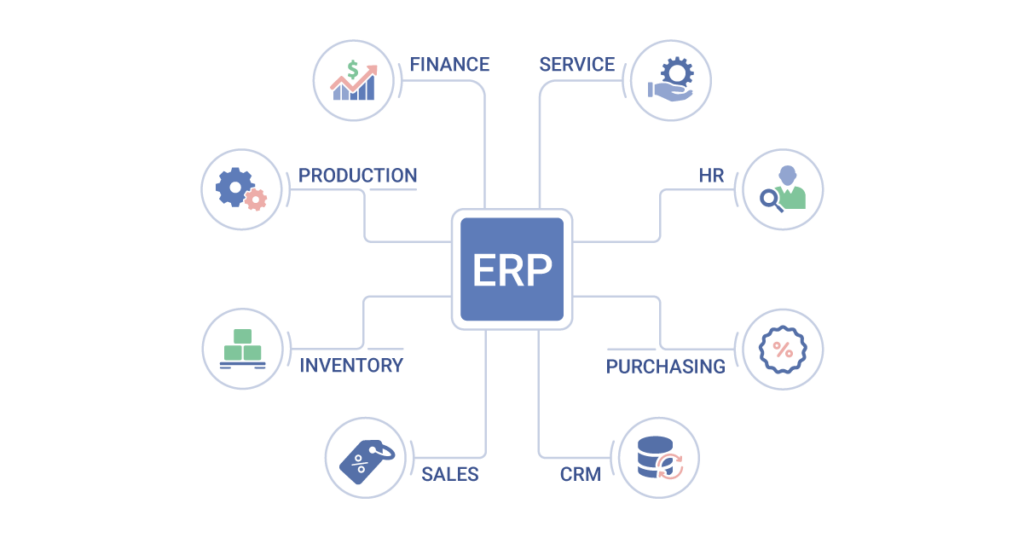
These pitfalls are all damaging to revenue, reputation or cash flow. They must be dealt with in a process and system. Enterprise resource planning software for ecommerce integrates all the aspects of operations, finance and logistics into a single source of truth. This not only speeds up decision-making but also minimises errors and safeguards margins in the compliance-focused and customer-expecting 2026.