

Table of contents
Growing a business in Egypt has never been more exciting—or more competitive.
Consumers have countless choices, advertising costs continue to rise, and customers expect personalized experiences before making a purchase. Simply running ads or posting on social media is no longer enough. Businesses need a structured marketing approach that guides customers from discovering a brand to becoming loyal buyers.
One of the oldest yet most effective frameworks for achieving this is the AIDA MODEL.
Despite being developed more than a century ago, the AIDA MODEL remains one of the most widely used marketing frameworks because it mirrors how people naturally make buying decisions.
Whether you’re launching an e-commerce store, promoting a restaurant, growing a healthcare business, or expanding a manufacturing company, understanding the AIDA MODEL can help you create marketing campaigns that convert attention into measurable business growth.
In this guide, you’ll discover:
- What the AIDA MODEL is
- Why it still works in today’s digital economy
- How to apply it in the Egyptian market
- Practical examples from different industries
- How Udjat UAE builds customer journeys using the AIDA MODEL
- How Brightery provides the technology that supports successful marketing execution
What Is the AIDA MODEL?

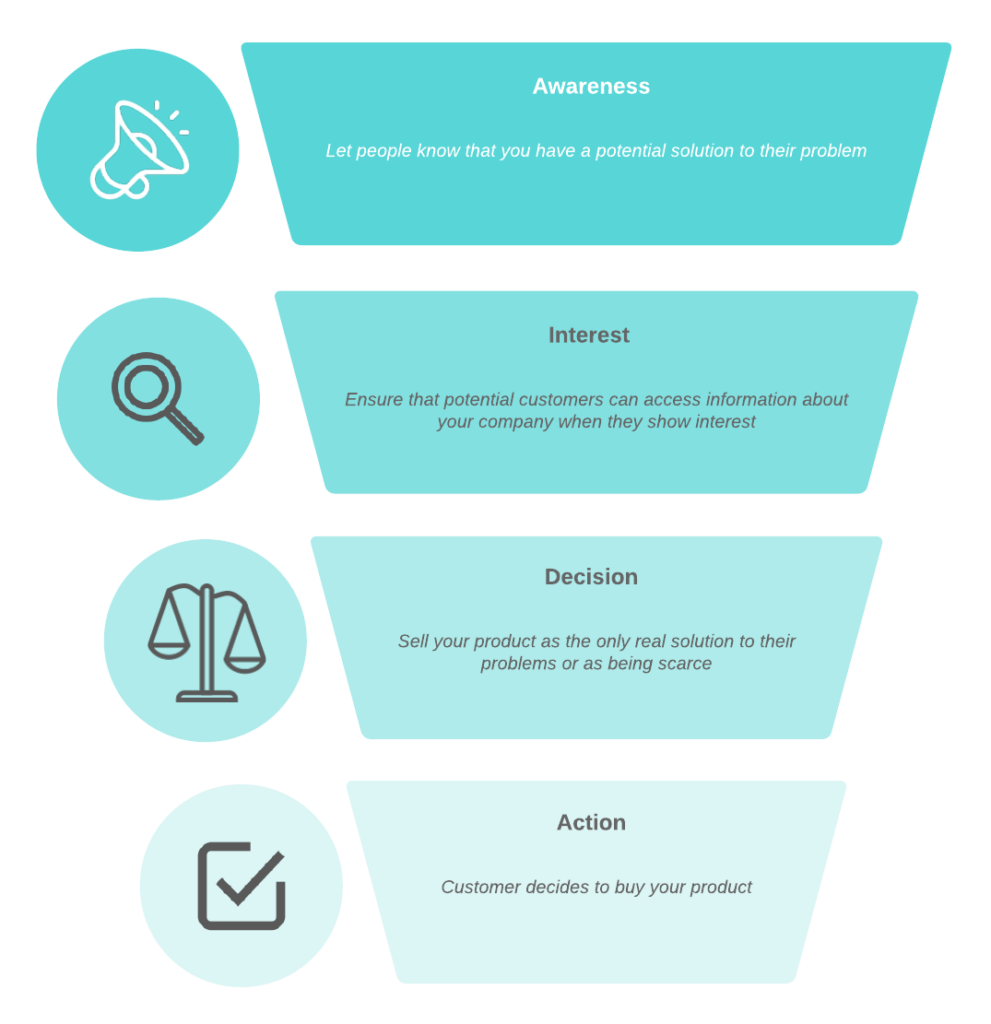
The AIDA MODEL is a marketing and communication framework that describes the four stages customers typically go through before making a purchasing decision.
AIDA stands for:
- Attention
- Interest
- Desire
- Action
Instead of trying to sell immediately, the model encourages businesses to build trust gradually, leading prospects through each stage of the buying journey.
This simple framework has remained relevant because modern digital marketing channels—including SEO, social media, email marketing, paid advertising, and content marketing—all support different stages of the AIDA process.
Why the AIDA MODEL Still Works
Consumer behavior has changed dramatically, but human psychology has not.
Before buying, people still need to:
- Notice your business.
- Understand what you offer.
- Believe your solution is valuable.
- Feel confident enough to take action.
Research from Google consistently shows that today’s customer journey is no longer linear, with buyers often researching brands across multiple channels before making a decision. The AIDA MODEL provides a structured way to support that journey by delivering the right message at the right stage.
Understanding the Four Stages of the AIDA MODEL
1. Attention
The first challenge is simple:
Get noticed.
If potential customers don’t know your business exists, they cannot become customers.
Businesses in Egypt capture attention through channels such as:
- Google Search
- SEO
- Social media
- Video marketing
- Paid advertising
- Public relations
- Influencer marketing
For example:
A new restaurant in Cairo launches professional food photography, short-form videos, and local SEO to appear when customers search for dining options nearby.
The goal isn’t to make an immediate sale.
The goal is to become visible.
Why Attention Is More Competitive in Egypt
Internet usage continues to grow across Egypt, while smartphone adoption and social media engagement have made digital competition stronger than ever.
Businesses compete not only with local competitors but also with international brands targeting Egyptian consumers.
This means attention must be earned through:
- Valuable content
- Strong branding
- Fast websites
- Search visibility
- Creative storytelling
How Udjat UAE Creates Attention
One reason businesses choose Udjat UAE is its focus on building sustainable visibility instead of relying solely on advertising.
The agency combines multiple channels, including:
- SEO
- Google Ads
- Meta Ads
- Content Marketing
- Local SEO
- Brand positioning
- AI-powered campaign optimization
Instead of chasing vanity metrics, campaigns are designed to increase qualified traffic and brand awareness among audiences most likely to convert.
2. Interest
Capturing attention is only the beginning.
Once someone discovers your business, they immediately ask:
“Why should I care?”
This is the Interest stage.
Businesses build interest by providing useful, educational, and relevant information.
Examples include:
- Blog articles
- Product demonstrations
- Customer success stories
- Educational videos
- Case studies
- Email newsletters
- Free resources
For example:
An industrial equipment company targeting Egyptian manufacturers might publish detailed guides explaining how automation reduces operational costs. This builds credibility before any sales conversation begins.
Technology Supports Every Stage
Even the strongest marketing strategy requires reliable digital infrastructure.
Brightery helps businesses execute the AIDA MODEL by developing:
- Enterprise websites
- E-commerce platforms
- CRM systems
- ERP solutions
- Mobile applications
- Customer portals
- AI-powered automation
- Custom software
A fast, secure, and scalable digital platform ensures that marketing efforts translate into positive customer experiences and higher conversion rates.
3. Desire
After capturing attention and building interest, the next stage of the AIDA MODEL is creating desire.
This is where marketing moves beyond simply informing customers and starts convincing them that your solution is the right choice.
At this stage, potential customers are asking questions like:
- Why should I choose this company?
- How will this product solve my problem?
- Is it worth my investment?
- Can I trust this brand?
Businesses that answer these questions clearly are far more likely to convert prospects into customers.
How to Create Desire in the Egyptian Market
Consumers in Egypt are becoming increasingly informed. Before making a purchase, many compare brands, read reviews, watch videos, and seek recommendations from friends or social media communities.
To build desire, businesses should focus on:
Demonstrating Value
Rather than listing features, explain the outcomes customers can expect.
For example:
Instead of saying:
“Our CRM has AI automation.”
Say:
“Reduce repetitive tasks, improve customer response times, and give your sales team more time to close deals.”
Customers buy results, not features.
Build Trust Through Social Proof
Trust is one of the strongest drivers of purchasing decisions.
Businesses should showcase:
- Customer testimonials
- Case studies
- Client success stories
- Industry certifications
- Awards
- Verified reviews
Real experiences help reduce uncertainty and strengthen confidence.
Show Expertise
Educational content positions your business as a trusted advisor.
Examples include:
- Industry reports
- Whitepapers
- Blog articles
- Webinars
- Video tutorials
When businesses consistently educate their audience, they naturally become more credible.
Example of Desire
Imagine an e-commerce business selling premium skincare products in Egypt.
Instead of publishing only promotional posts, the company shares:
- Dermatologist recommendations
- Before-and-after customer stories
- Ingredient explanations
- Scientific research
- Video demonstrations
This content creates confidence and encourages customers to consider purchasing.
How Udjat UAE Builds Customer Desire
Creating desire requires more than attractive advertising.
Udjat UAE develops integrated marketing strategies that strengthen trust through:
- Educational content
- Professional branding
- Search engine optimization
- Conversion-focused landing pages
- High-quality visual storytelling
- Customer journey optimization
Instead of encouraging immediate purchases, campaigns focus on helping customers understand why a product or service provides long-term value.
This approach often leads to higher-quality leads and stronger customer relationships.
4. Action
The final stage of the AIDA MODEL is Action.
This is where customers take the next step.
Depending on the business, that action could include:
- Purchasing a product
- Requesting a quotation
- Booking a consultation
- Reserving a table
- Downloading a guide
- Calling the sales team
- Completing a registration form
Every marketing campaign should include a clear call to action.
Examples include:
- Schedule a Free Consultation
- Request a Demo
- Download the Guide
- Book Your Appointment
- Start Your Free Trial
- Contact Our Team
Without a clear action, even excellent marketing campaigns may fail to generate measurable business results.
Removing Barriers to Action
Many businesses lose customers because they make purchasing difficult.
Common obstacles include:
- Slow websites
- Complicated forms
- Poor mobile experiences
- Confusing navigation
- Hidden pricing
- Long checkout processes
Reducing friction significantly improves conversion rates.
This is why user experience and website performance are essential parts of successful digital marketing.
How Brightery Supports the Action Stage
Technology plays a critical role in converting visitors into customers.
Brightery develops digital solutions that improve customer experiences through:
- High-performance websites
- Secure e-commerce platforms
- Mobile applications
- CRM integration
- Booking systems
- Customer portals
- AI-powered automation
- ERP integration
A well-developed digital platform supports every stage of the AIDA MODEL, especially the final conversion stage.
Applying the AIDA MODEL in the Egypt Market
Although the framework is universal, implementation should reflect local customer behavior.
Understand Local Consumer Behavior
Egyptian consumers often spend time comparing alternatives before making purchasing decisions.
Businesses should therefore invest in:
- Educational content
- Customer reviews
- Transparent pricing
- Helpful FAQs
- Local SEO
- Arabic-language content when appropriate
Optimize for Mobile Users
Mobile internet usage continues to dominate digital activity across Egypt.
Businesses should ensure:
- Responsive websites
- Fast loading times
- Mobile-friendly forms
- Easy navigation
- Click-to-call functionality
Build Long-Term Trust
Trust remains one of the strongest competitive advantages.
Businesses that consistently publish valuable content, respond to customer questions, and maintain professional branding are more likely to earn repeat business.
Practical Example
Imagine a manufacturing company targeting factories across Egypt.
Attention
Publish educational LinkedIn content and optimize SEO.
Interest
Share case studies explaining production improvements.
Desire
Present measurable customer results and testimonials.
Action
Offer a free operational assessment through a simple online form.
Every stage supports the next, creating a structured customer journey rather than relying on aggressive sales tactics.
Common Mistakes Businesses Make
Many companies unknowingly skip important stages of the AIDA MODEL.
Common mistakes include:
- Selling before building trust.
- Ignoring educational content.
- Using generic calls to action.
- Publishing inconsistent branding.
- Focusing only on advertising.
- Neglecting website performance.
- Measuring likes instead of business KPIs.
- Failing to nurture leads after initial contact.
Businesses that address these issues typically improve both marketing efficiency and customer satisfaction.
Why the AIDA MODEL Still Matters in 2026
While marketing channels continue to evolve through AI, automation, and advanced analytics, the psychology behind purchasing decisions remains remarkably consistent.
Customers still need to:
- Discover your business.
- Learn about your solution.
- Believe it’s the right choice.
- Feel confident enough to take action.
The AIDA MODEL provides a simple yet powerful framework for guiding customers through each of these stages.
For organizations seeking sustainable growth, combining a structured framework like the AIDA MODEL with strategic marketing expertise from Udjat UAE and robust digital infrastructure from Brightery creates a strong foundation for long-term success.
Whether you’re launching a startup, expanding an enterprise, or entering new markets, following this structured approach can help transform marketing activities into measurable business outcomes.
AIDA MODEL vs Other Popular Marketing Frameworks
Choosing the right marketing framework depends on your business objectives, target audience, and marketing maturity. While the AIDA MODEL is one of the oldest and most effective customer journey frameworks, it works even better when combined with broader strategic planning models.
| Framework | Primary Focus | Best For | Strengths |
|---|---|---|---|
| AIDA MODEL | Customer buying journey | Lead generation, sales funnels, advertising | Simple, customer-focused, easy to implement |
| SOSTAC Model | Strategic marketing planning | Long-term business planning | Structured planning from analysis to measurement |
| Marketing Funnel | Customer lifecycle | Digital campaigns | Visualizes conversion stages |
| STP Model | Segmentation, Targeting, Positioning | Brand positioning | Helps identify ideal customer segments |
| SWOT Analysis | Business analysis | Strategic planning | Evaluates internal and external factors |
| RACE Framework | Digital marketing performance | Online marketing | Connects digital channels to measurable KPIs |
Many successful organizations don’t rely on a single framework. For example, they may use the SOSTAC Model for annual planning while applying the AIDA MODEL to individual campaigns and landing pages.
Benefits of Using the AIDA MODEL
Businesses continue to adopt the AIDA MODEL because it delivers practical advantages across industries.
Some of the key benefits include:
- Creates a clear customer journey.
- Improves campaign consistency.
- Helps prioritize marketing investments.
- Aligns content with customer intent.
- Increases conversion opportunities.
- Supports SEO and content marketing strategies.
- Works across both B2B and B2C industries.
- Simplifies campaign planning for marketing teams.
- Encourages measurable marketing objectives.
- Improves collaboration between marketing and sales.
Whether you’re selling software, real estate, healthcare services, manufacturing solutions, or consumer products, the framework adapts to different business models.
Why Business Owners Choose Udjat UAE
Many businesses struggle because they invest heavily in advertising before building a structured customer journey.
Udjat UAE approaches marketing differently.
Rather than focusing on isolated campaigns, the agency develops complete growth strategies that guide potential customers through every stage of the AIDA MODEL.
Its services include:
- Search Engine Optimization (SEO)
- Google Ads management
- Meta Ads
- LinkedIn marketing
- Content marketing
- Conversion Rate Optimization (CRO)
- Marketing automation
- Brand strategy
- AI-assisted campaign optimization
- Marketing analytics and reporting
Every campaign is designed around measurable business outcomes such as qualified leads, customer acquisition, conversion rates, and revenue growth.
How Brightery Complements the AIDA MODEL
Marketing generates opportunities, but technology turns those opportunities into customer experiences.
Brightery supports businesses by building digital platforms that strengthen every stage of the AIDA MODEL, including:
- Corporate websites
- Enterprise portals
- E-commerce stores
- CRM systems
- ERP platforms
- Mobile applications
- AI-powered business automation
- Customer self-service portals
- API integrations
- Custom software development
By combining strategic marketing with reliable technology, businesses can scale more efficiently while delivering a better customer experience.
More Than 10 SEO-Optimized FAQs About the AIDA MODEL
1. What is the AIDA MODEL?
The AIDA MODEL is a marketing framework that explains the four stages customers go through before making a purchase: Attention, Interest, Desire, and Action. It helps businesses create campaigns that guide prospects toward conversion.
2. What does AIDA stand for?
AIDA stands for:
- Attention
- Interest
- Desire
- Action
Each stage represents a different phase in the customer decision-making process.
3. Why is the AIDA MODEL important?
The AIDA MODEL helps businesses understand customer behavior, create more relevant marketing messages, improve engagement, and increase conversion rates by delivering the right content at each stage of the buying journey.
4. Is the AIDA MODEL still relevant today?
Yes. Although the framework was developed many years ago, it remains highly relevant because it reflects how people naturally make purchasing decisions. Modern digital channels such as SEO, social media, email marketing, and paid advertising all support different stages of the AIDA process.
5. How can businesses in Egypt use the AIDA MODEL?
Businesses in Egypt can apply the AIDA MODEL by increasing online visibility through SEO and advertising, building trust with educational content and customer reviews, highlighting value through case studies, and simplifying the conversion process with fast, mobile-friendly websites and clear calls to action.
6. What industries benefit most from the AIDA MODEL?
The framework works across many industries, including:
- E-commerce
- Healthcare
- Hospitality
- Manufacturing
- Education
- Financial services
- Professional services
- Real estate
- Technology
- Retail
7. How does SEO support the AIDA MODEL?
SEO helps businesses attract attention by improving visibility in search engines. It also supports the Interest and Desire stages by providing educational content that answers customer questions and builds trust before purchase.
8. What is the difference between the AIDA MODEL and the marketing funnel?
The AIDA MODEL focuses on customer psychology and buying behavior, while the marketing funnel represents the overall customer lifecycle. The two concepts complement each other and are often used together.
9. Can small businesses use the AIDA MODEL?
Absolutely. Small businesses benefit from the AIDA MODEL because it provides a simple framework for creating effective marketing campaigns without requiring large budgets or complex systems.
10. How does Udjat UAE implement the AIDA MODEL?
Udjat UAE uses the AIDA MODEL to build integrated marketing strategies that combine SEO, content marketing, paid advertising, conversion optimization, analytics, and AI-powered insights. The goal is to move potential customers smoothly from initial awareness to measurable business outcomes.
11. What role does Brightery play in implementing the AIDA MODEL?
Brightery develops the digital infrastructure that supports successful marketing execution, including websites, mobile applications, CRM systems, ERP platforms, e-commerce solutions, and automation tools that improve customer experience and conversion rates.
12. What metrics should businesses measure after implementing the AIDA MODEL?
Key performance indicators include:
- Organic traffic
- Website engagement
- Conversion rate
- Qualified leads
- Customer acquisition cost (CAC)
- Return on Ad Spend (ROAS)
- Customer Lifetime Value (CLV)
- Revenue growth
- Lead-to-sale conversion rate
- Return on Investment (ROI)
Tracking these metrics helps businesses continuously refine their marketing strategy.
Conclusion
The AIDA MODEL remains one of the most practical and effective marketing frameworks because it mirrors the way customers naturally make decisions. Instead of pushing for immediate sales, it encourages businesses to first capture attention, build genuine interest, create desire through trust and value, and then make it easy for customers to take action.
For businesses operating in Egypt, where digital adoption continues to grow and competition is increasing across nearly every industry, following the AIDA MODEL provides a structured way to improve marketing performance while reducing wasted effort.
A successful implementation goes beyond advertising. It requires valuable content, strong search visibility, a seamless user experience, continuous performance analysis, and reliable technology.
This is where Udjat UAE adds value by developing integrated marketing strategies tailored to business objectives, while Brightery provides the websites, applications, business systems, and digital infrastructure needed to support long-term growth.
When strategic marketing and scalable technology work together, businesses are better positioned to attract qualified prospects, convert more customers, and build sustainable competitive advantages.
Trusted References
- Philip Kotler & Kevin Keller – Marketing Management
- P. R. Smith – Marketing Communications
- Google Search Central Documentation
- Think with Google
- HubSpot – State of Marketing Report
- Statista – Digital Consumer Trends
- DataReportal – Egypt Digital Report
- Gartner – Marketing Strategy Research
- Nielsen – Consumer Behavior Reports
Ready to Improve Your Marketing Strategy?
Whether you’re launching a new business, expanding into new markets, or improving your digital performance, applying the AIDA MODEL can help create more effective customer journeys and stronger business outcomes. By combining a structured marketing framework with expert execution and scalable technology, businesses can turn marketing investments into measurable, long-term growth.