

Table of contents
- What Are the Main Sales Funnel Stages?
- What Is a Sales Funnel?
- Sales Funnel Stages at a Glance
- Stage 1: Awareness — Reach Relevant Potential Buyers
- Stage 2: Interest — Help the Buyer Understand the Offer
- Stage 3: Consideration — Establish Fit
- Stage 4: Intent — Recognise a Meaningful Buying Action
- Stage 5: Evaluation — Resolve the Remaining Questions
- Stage 6: Purchase — Complete and Verify the Transaction
- After Purchase: Retention and Advocacy
- TOFU, MOFU, and BOFU Explained
- B2B Sales Funnel Stages: Translate the Model Into Records
- E-Commerce Sales Funnel Stages: Track Purchasing Actions
- What Cart Abandonment Data Actually Tells You
- How to Measure Sales Funnel Stages
- Sales Funnel Versus Pipeline and Sales Cycle
- How to Improve Sales Funnel Stages
- A 30-Day Sales Funnel Review
- Frequently Asked Questions
- What Are the Main Sales Funnel Stages?
- How Many Steps Should a Sales Funnel Have?
- What Is the Difference Between Interest and Intent?
- Is Retention a Sales Funnel Stage?
- What Is a Good Sales Funnel Conversion Rate?
- Do More Leads Always Mean More Sales?
- Can a CRM Track Sales Funnel Stages?
- How Can Udjat Help Improve a Sales Funnel?
- Make Every Step Explainable
- Sources
Your campaign generates enquiries. Your team sends proposals. Sales remain disappointing.
Where does the problem sit?
It could be the audience, the offer, the buying experience, qualification, or the way your team handles the next conversation. A single total for “leads generated” cannot tell you.
Sales funnel stages make the journey easier to examine. They help you identify what buyers need, which actions indicate progress, and where opportunities stop moving.
For business owners in Egypt and the UAE, that visibility matters before increasing a marketing budget. More people entering an unclear journey can create more work without resolving the reason they leave.
What Are the Main Sales Funnel Stages?
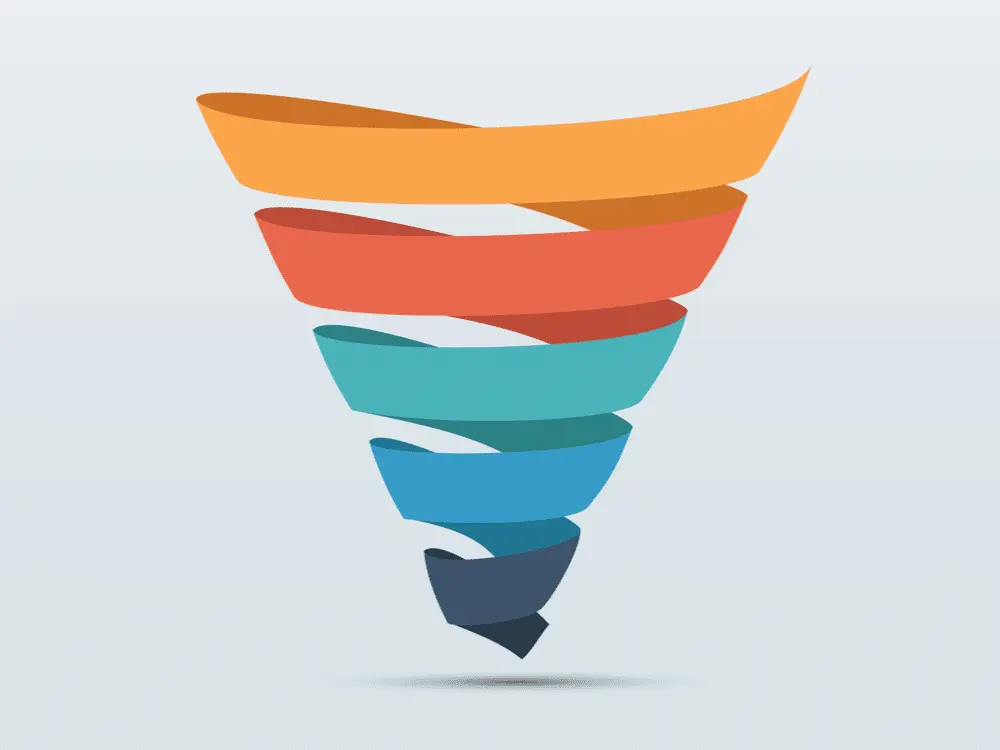
A practical six-stage sales funnel includes:
- Awareness: the buyer discovers the business or a possible solution.
- Interest: they want to learn more.
- Consideration: they assess whether the offer fits their need.
- Intent: they take a meaningful step towards buying.
- Evaluation: they resolve the remaining questions and compare alternatives.
- Purchase: they complete the defined buying event.
Salesforce uses a six-stage model with these broad labels. Businesses can combine, rename, or adapt the stages.
There is no requirement to force every purchase through six separate CRM statuses.
Some decisions happen quickly. Others involve several people, repeat conversations, and formal approvals. Buyers can also revisit an earlier question or enter the journey already familiar with your offer.
What Is a Sales Funnel?
A sales funnel is a model of how potential customers move towards a purchase, commonly showing fewer people or opportunities reaching later steps.
It serves two useful purposes.
First, it helps the team understand the buyer’s questions. Second, it helps the business measure progression between defined actions.
Keep those purposes connected.
“Consideration” describes a buying situation. “Qualified opportunity” is a business record with agreed criteria. You need a clear mapping between the conceptual journey and the events your team can observe.
A page view alone does not prove someone is considering a purchase. It is an action you may record while investigating the broader behaviour.

Sales Funnel Stages at a Glance
| Stage | Buyer’s question | Useful business response | Possible evidence |
|---|---|---|---|
| Awareness | What could help with this need? | Make the relevant offer discoverable | An attributable visit or initial interaction |
| Interest | What does this business provide? | Explain the offer clearly | A relevant enquiry or continued engagement |
| Consideration | Is this suitable for my situation? | Clarify fit, scope, and conditions | A qualification conversation |
| Intent | What would I need to do to buy? | Provide an appropriate next step | A quote request, trial request, or cart action |
| Evaluation | Can I justify choosing this option? | Resolve specific concerns | A proposal review or product assessment |
| Purchase | How do I complete the transaction? | Make the agreed buying step clear | A verified order, payment, or agreement |
These signals are examples. Define the evidence that makes sense for your business.
The same action can have different meanings. A trial registration might come from a serious buyer, a student, or someone exploring casually.
Stage 1: Awareness — Reach Relevant Potential Buyers
Awareness begins when a potential buyer encounters your business or recognises an offer that could address a need.
Your job is to help suitable customers discover and understand the relevance of the offer.
What to Do
Start with the customer’s buying situation.
A founder looking for a CRM may be struggling with missed follow-ups. A shopper looking for furniture may need to furnish a room within specific dimensions.
Content and campaigns should make that connection understandable.
Useful activity might include search visibility, relevant advertising, referrals, educational content, or partnerships. Choose channels after investigating how your intended buyers discover options.
Udjat’s performance marketing services can support acquisition around a defined audience, offer, and commercial objective.
What to Measure
Use reach, relevant traffic, and initial interactions as discovery measures.
Avoid treating them as purchases in disguise.
If visibility increases but suitable enquiries do not, investigate the audience, message, offer, and next step. The numbers show where to look; they do not establish the cause.
Stage 2: Interest — Help the Buyer Understand the Offer
At the interest stage, someone wants more information.
They may explore a service page, examine a product, ask a question, or request an introductory conversation.
Answer the Basic Questions
Make it easy to understand:
- What do you provide?
- Who is it suitable for?
- What requirement does it address?
- Where do you deliver or provide support?
- What should someone do next?
A visitor should not have to decode your terminology to establish whether you can help.
For a service business, explain the scope. For a store, show useful product information. For software, explain the relevant workflow and requirements.
Keep the Next Step Proportionate
Someone asking a simple question may need a clear answer before they are ready for a demonstration.
Give buyers a reasonable way to progress. Match the next action to their current requirement rather than treating every interaction as a request for a sales call.
Measure Useful Engagement
Track relevant enquiries, completed forms, booked conversations, or other defined actions.
A social reaction can indicate engagement. It does not establish purchasing intent or customer fit.
Udjat’s lead generation services can help connect acquisition with a clear definition of the enquiry your business needs.
Stage 3: Consideration — Establish Fit
During consideration, the buyer assesses whether your offer makes sense for their situation.
This is where broad interest needs a more specific discussion.
For B2B and Service Businesses
Ask about the requirement, existing approach, timing, decision process, and relevant constraints.
Qualification should help both sides determine whether proceeding is worthwhile.
If you cannot fulfil the requirement, record that clearly. Keeping an unsuitable enquiry active makes the pipeline look larger while obscuring useful demand.
For E-Commerce
Help shoppers evaluate the product through specifications, dimensions, compatibility, images, and clear purchasing conditions.
Consideration may happen without a conversation with your team. The page still has a job to do.
Measure Fit Separately From Volume
For an enquiry-based business, one useful measure is:
Qualification rate = qualified enquiries ÷ eligible enquiries assessed × 100
State what “qualified” means and which enquiries are included.
If two employees use different criteria, the rate becomes difficult to interpret.
Stage 4: Intent — Recognise a Meaningful Buying Action
Intent appears when someone takes an action that suggests they are exploring a purchase more concretely.
Examples might include requesting a quote, asking for a relevant trial, or adding an item to a cart.
Intent is evidence to investigate, not a completed sale.
Make the Required Action Clear
Explain what happens after the buyer submits a request.
Who responds? What information is needed? Will there be a review conversation? Can the shopper see the next checkout step?
A clear handover prevents the buyer from wondering whether anything happened.
Avoid Overstating the Signal
A cart can be a place to save items. A quote can be part of comparing suppliers. A trial can be exploratory.
Use the action alongside customer fit and further evidence.
Your reporting should distinguish what the person did from what your team believes it means.
Stage 5: Evaluation — Resolve the Remaining Questions
Evaluation concerns the specific issues affecting the decision.
Depending on the purchase, this may include a demonstration, proposal review, technical assessment, price comparison, or discussion of delivery conditions.
Consideration and evaluation often overlap. Keep them separate only when the distinction helps your team understand or measure the journey.
Use the Buyer’s Actual Questions
Relevant questions might include:
- What is included and excluded?
- What will implementation require?
- Does the product work with the existing setup?
- Who provides support?
- What are the delivery or service conditions?
- What evidence supports the claims?
- Who must approve the purchase?
Prepare accurate answers that your marketing, sales, and delivery teams can use consistently.
Give Proposals a Review Step
For a service business, sending a proposal is an activity. Knowing that the buyer reviewed it is different evidence.
Where appropriate, agree on a discussion to examine scope, assumptions, and remaining decisions.
Udjat’s sales enablement services can help align sales materials, workflows, and tools with those conversations.
Record Why Evaluation Stops
Distinguish between unsuitable scope, affordability, a competitor choice, postponed timing, and no confirmed decision.
“Not interested” rarely gives enough detail to improve the offer or targeting.
Stage 6: Purchase — Complete and Verify the Transaction
Purchase is the defined commercial event that makes someone a customer.
Agree on that event before measuring conversion.
For an online store, an order created and a payment collected are different events. A cash-on-delivery order can also be cancelled or fail delivery.
For a service business, an agreement may be signed before an invoice is paid.
Make Completion Straightforward
Review checkout errors, required information, payment instructions, order confirmation, and contract steps.
Give the buyer enough clarity to complete the intended action.
Then verify the outcome in the appropriate transaction or business system.
Track the Outcome You Actually Need
Report placed orders, paid orders, fulfilled orders, and cancellations separately when those distinctions matter.
For B2B, separate won opportunities from collected revenue where payment terms require it.
That prevents a promising funnel report from hiding an operational or collection problem.
After Purchase: Retention and Advocacy
The six sales funnel stages above end at purchase. The customer relationship continues.
Onboarding, fulfilment, support, renewal, repeat buying, and referrals belong to the broader customer lifecycle.
Track them alongside acquisition, especially if your business depends on repeat purchases or subscriptions.
Ask whether customers receive what was promised, can use it successfully, and have a relevant reason to return.
A first sale tells you something about acquisition. It does not tell you the full value or quality of the relationship.
TOFU, MOFU, and BOFU Explained
These labels group the journey into broader areas:
| Group | Meaning | Practical focus |
|---|---|---|
| TOFU | Top of funnel | Discovery and initial understanding |
| MOFU | Middle of funnel | Fit, information, and consideration |
| BOFU | Bottom of funnel | Remaining decisions and purchase |
The boundaries vary. Use them to organise activity rather than create rigid rules.
A useful pricing explanation may support several sales funnel stages. Buyers need information when their question arises, even if your content calendar assigned it elsewhere.
B2B Sales Funnel Stages: Translate the Model Into Records
A practical B2B reporting funnel might use:
Enquiry → qualified enquiry → opportunity → reviewed proposal → won deal
These are observable business steps rather than direct measurements of a buyer’s thoughts.
HubSpot’s lifecycle documentation distinguishes marketing-qualified leads, sales-qualified leads, opportunities, and customers. Those are platform definitions that businesses should interpret and configure appropriately.
Agree on:
- What creates an enquiry.
- Who assesses suitability.
- What creates an opportunity.
- What counts as proposal review.
- What marks a win.
- Who owns the next action.
Keep contact, company, and deal counts distinct. One company can have several contacts and more than one opportunity.
E-Commerce Sales Funnel Stages: Track Purchasing Actions
An illustrative online purchasing funnel is:
Product view → add to cart → begin checkout → verified purchase
It measures recorded actions. It does not capture every earlier discovery interaction or offline influence.
Google Analytics funnel exploration supports defined sequential steps. An open funnel allows entry at any step; a closed funnel requires entry at the first step.
That choice affects the report.
Confirm the events, identity basis, sequence, and time window before comparing conversion rates.
A missing event can create an apparent drop-off even when someone purchased successfully. Review tracking before redesigning the experience.
What Cart Abandonment Data Actually Tells You
Baymard’s compilation displays an average documented cart abandonment rate of 70.22%, calculated from 50 studies. The compilation lists its last update as 22 September 2025.
That is a synthesis of studies from different periods and sources. It is not a measurement of Egyptian or UAE shoppers, and it is not your store’s target.
The useful implication is that adding to cart and purchasing are distinct actions.
Measure your own journey. Investigate the reasons behind the observed behaviour rather than assuming every unfinished cart represents a checkout defect.
How to Measure Sales Funnel Stages
For a defined sequential funnel:
Stage conversion rate = records progressing to the next step ÷ eligible records entering the previous step × 100
Use a consistent unit: people, accounts, opportunities, or another defined entity.
A Worked B2B Example
These figures are hypothetical and represent one cohort followed long enough to observe the listed outcomes.
| Step | Count | Conversion from previous step |
|---|---|---|
| Eligible enquiries | 200 | — |
| Qualified enquiries | 80 | 40% |
| Opportunities | 40 | 50% |
| Reviewed proposals | 30 | 75% |
| Won deals | 12 | 40% |
Overall enquiry-to-win conversion is:
12 ÷ 200 × 100 = 6%
This example assumes one eligible enquiry maps to one potential deal, with each later group contained within the preceding group.
If your real process differs, adapt the calculation.
Read the Rate Alongside Its Context
Track volumes, time between steps, losses, source, customer fit, and commercial outcomes.
A small group can produce a volatile percentage. Open deals need time to mature.
Comparing this month’s enquiries with this month’s wins can mislead when those wins came from earlier enquiries.
Use cohorts or explain the limitations of the reporting period.
Sales Funnel Versus Pipeline and Sales Cycle
| Term | Useful working meaning |
|---|---|
| Sales funnel | Buyer progression and conversion between defined steps |
| Sales pipeline | Active opportunities arranged by operational stage |
| Sales cycle | The stages and elapsed journey involved in completing a sale |
Definitions vary across businesses and tools.
A pipeline snapshot can tell you where active deals currently sit. It does not automatically tell you how many moved through each stage over a period.
A sales funnel can reveal conversion patterns. The sales cycle adds information about duration.
Use them together without treating the reports as interchangeable.
How to Improve Sales Funnel Stages
Find the Constraint Before Choosing the Tactic
If relevant traffic rarely produces enquiries, review message, offer, and page experience.
If enquiries rarely qualify, review targeting and expectations.
If qualified opportunities rarely reach a decision, review fit, decision support, ownership, and timing.
These are starting hypotheses. Validate them with records and buyer feedback.
Assign Every Handover
Specify who receives a request, what they must do, and how progress is recorded.
Automation can support reminders and routing. Clear responsibilities still need to exist.
Improve One Meaningful Step
Choose a change with a defined purpose and measurable outcome.
Examples include clearer product information, a revised enquiry form, or a structured proposal review.
Check whether improving one step harms another. More forms completed can be a poor outcome if lead quality falls sharply.
Keep the Offer Honest
Remove false urgency and unsupported claims.
Help the buyer make an informed decision. A funnel that creates unsuitable customers can cause problems after the sale.
A 30-Day Sales Funnel Review
Week 1: Define
Document the sales funnel stages, entry criteria, owner, and desired outcome.
Week 2: Verify
Review event tracking and CRM records. Check duplicate entries, missing outcomes, and inconsistent definitions.
Week 3: Investigate
Select a material constraint. Review customer questions and recent wins, losses, and pauses.
Week 4: Test
Implement a focused change and review early evidence.
Longer sales cycles may require more time before commercial results can be assessed.
Frequently Asked Questions
What Are the Main Sales Funnel Stages?
A practical model includes awareness, interest, consideration, intent, evaluation, and purchase. Adapt the model to your buying journey.
How Many Steps Should a Sales Funnel Have?
There is no universal number. Use enough steps to identify meaningful changes without creating unnecessary reporting work.
What Is the Difference Between Interest and Intent?
Interest means someone wants to learn more. Intent is a stronger buying signal, such as a relevant quote request or cart action. Neither guarantees a purchase.
Is Retention a Sales Funnel Stage?
Some models include it. In this guide, purchase ends the acquisition funnel, while retention and advocacy sit in the wider customer lifecycle.
What Is a Good Sales Funnel Conversion Rate?
There is no single rate for every business. Compare consistently defined cohorts, customer groups, and outcomes within your own operation.
Do More Leads Always Mean More Sales?
No. Results also depend on fit, qualification, the offer, buying support, and the ability to complete the transaction.
Can a CRM Track Sales Funnel Stages?
It can support records, ownership, and progression. Useful reporting still requires agreed definitions and accurate data.
How Can Udjat Help Improve a Sales Funnel?
Udjat can connect acquisition, lead generation, sales enablement, and measurement around the steps that matter to your business.
Make Every Step Explainable
Useful sales funnel stages let you explain what happened between discovery and purchase.
Who entered? Who qualified? What helped them decide? Where did progress stop?
Start with those questions. Define the evidence, verify the records, and improve the constraint you can substantiate.
This guide was prepared by the team at Udjat Agency. Review your sales funnel stages with Udjat and turn the findings into a practical marketing and sales plan.
Sources
- Salesforce — What Is a Sales Funnel?: six-stage model and the limits of a linear buying journey. Salesforce
- Google Analytics Help — Funnel Exploration: sequential step definitions and open versus closed funnels. Analytics Help
- HubSpot — Use Contact and Company Lifecycle Stages: platform definitions for lead qualification, opportunities, and customers. knowledge.hubspot.com
- Baymard Institute — Cart Abandonment Rate Statistics: compiled cart-abandonment data and methodology; last update displayed September 2025. Baymard
- Salesforce — What Is a Sales Pipeline?: pipeline concepts and their relationship to funnel reporting.