


Table of contents
- 1. Find Pages That Already Attract Relevant Impressions
- 2. Answer the Question Behind the Search
- 3. Replace Vague Titles With Specific Descriptions
- 4. Rewrite the Opening Around the Visitor’s Immediate Question
- 5. Add Missing Customer Questions to the Page
- 6. Refresh the Evidence Buyers Use to Evaluate You
- 7. Improve Internal Links From Related Content
- 8. Improve Arabic and English Pages According to Their Audiences
- 9. Remove Friction Between the Answer and the Enquiry
- 10. Keep a Change Log and Compare Results
- Which SEO Quick Wins Should You Prioritise?
- Frequently Asked Questions
- Sources
Your next SEO opportunity could be a page you published months ago.
It already appears in Google. It covers a service your business sells. Yet the title is vague, an important customer question goes unanswered, or visitors struggle to find the next step.
Before commissioning another batch of articles, examine what your existing pages could do better.
For businesses looking for SEO quick wins in Egypt, this means finding relevant pages with existing visibility, identifying a specific weakness, and making an improvement you can evaluate. “Quick” describes the scope of the work; search results can take time to respond.
This guide focuses on improving existing content. For the wider strategy, including technical foundations and market research, read Udjat’s complete guide to SEO in Egypt.
1. Find Pages That Already Attract Relevant Impressions
Start with Google Search Console’s Search results performance report. Filter the country to Egypt, select a useful date range, and examine pages alongside the queries that bring them visibility.
Look for pages that match a real business priority and receive relevant impressions but limited clicks. Inspect each page separately before deciding what needs changing.
Search Console’s average position is an aggregate across impressions. Use it as context rather than treating it as a fixed ranking every customer sees.
Practical action: Shortlist a small group of commercially relevant pages and record their current queries, clicks, impressions, and click-through rate before editing.
2. Answer the Question Behind the Search
A page can mention the right subject while answering the wrong question.
Imagine a hypothetical Egyptian packaging supplier whose page appears for searches about custom packaging minimum orders. The page discusses design quality but never explains order requirements.
The useful improvement is to explain minimum quantities, what affects them, and what information a buyer needs for a quotation. Where requirements vary, describe the variables honestly.
Practical action: Choose a relevant query cluster and identify the decision the searcher is trying to make. Check whether the existing page helps them make it.
3. Replace Vague Titles With Specific Descriptions
A title such as “Our Solutions” gives a searcher little reason to investigate.
“Custom Retail Packaging in Egypt | Company Name” communicates the subject more clearly, provided that description accurately represents the page and business.
Google generates title links using several sources, including the title element and prominent page text. Your preferred wording may not appear exactly as supplied.
Practical action: Give each shortlisted page a distinctive title, align its main heading with its purpose, and remove repeated keywords or unsupported claims.
4. Rewrite the Opening Around the Visitor’s Immediate Question
Long introductions about the importance of an industry often delay the answer a buyer needs.
On an existing service page, explain what the business provides, whom it serves, and which requirements affect suitability. On a guide, answer the main question before developing the detail.
For an Egyptian supplier, delivery coverage, installation availability, or quotation requirements may be more useful than another paragraph about commitment to excellence.
Practical action: Read the opening on a phone. Check whether a first-time visitor can quickly understand what the page offers and why it is relevant.
5. Add Missing Customer Questions to the Page
Sales conversations often reveal content gaps. Prospects may repeatedly ask what is included, how implementation works, or what they need to prepare.
When a question belongs to the existing page’s purpose, answer it there. A concise section can be more useful than a separate article that repeats most of the same information.
Create another page when the subject needs a genuinely different or substantial answer.
Practical action: Ask your sales team for recurring questions and add the most relevant answers to the appropriate pages.
6. Refresh the Evidence Buyers Use to Evaluate You
An old screenshot, expired offer, or outdated specification can make otherwise useful content harder to trust.
Review existing claims against current business information. Add approved project examples, accurate specifications, current processes, or a useful explanation from the relevant specialist.
Changing the year in a headline should accompany a substantive review of the information.
Practical action: Replace one weak claim with something a buyer can assess, such as a documented process, an approved example, or a clear description of scope.
7. Improve Internal Links From Related Content
A useful page may receive little attention from the rest of your website.
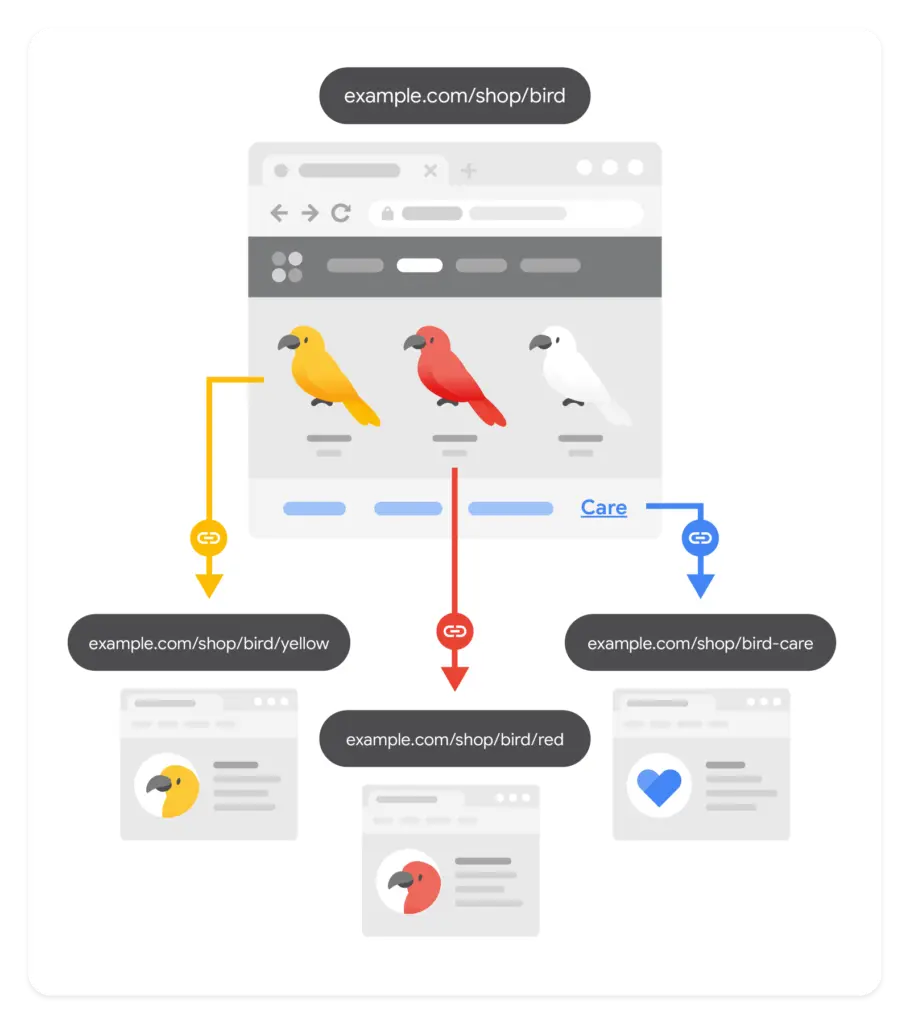
Find relevant articles and service pages where a link would help readers continue their research. Use descriptive wording that explains the destination.
For example, an article about preparing a product launch could link naturally to your market research service when it discusses validating demand.
Google recommends crawlable links and meaningful anchor text. Focus on useful relationships between pages.
Practical action: Add contextual links to the improved page from closely related content, then check that its own links lead to appropriate next steps.
8. Improve Arabic and English Pages According to Their Audiences
If your business has both language versions, review the actual queries and customer questions associated with each.
An Arabic page may need clearer local terminology or better right-to-left formatting. An English page serving regional procurement teams may need more detail about documentation or delivery arrangements.
Use the evidence available for your audience. Avoid assuming that the same literal wording serves both languages equally well.
Practical action: Review one language version at a time, including its title, headings, examples, mobile layout, and enquiry form.
9. Remove Friction Between the Answer and the Enquiry
Once a visitor finds the information they need, the next step should be clear.
A technical service page might invite a project brief. A product page might offer a quotation request. A detailed guide might link to a related service for readers who need implementation support.
Check forms and contact options on mobile. Explain what information is needed and what happens after submission.
Practical action: Test the enquiry journey from the page itself. Treat conversion improvements as business improvements, without assuming they directly raise rankings.
10. Keep a Change Log and Compare Results
Record what changed, which page you edited, and why. This makes later reporting more useful.
Compare equivalent periods while considering seasonality, device mix, search demand, and other website changes. Ramadan, Eid, promotions, and business buying cycles may affect an Egyptian company’s results.
Use clicks and click-through rate alongside enquiries and enquiry quality. A page can attract more visits without attracting better prospects.
Hypothetical example: A page receives 4,000 impressions and 80 clicks, giving a 2% click-through rate. In a later comparable period, 4,000 impressions and 120 clicks produce a 3% rate.
That is worth investigating, but it does not prove the edit caused the change or that enquiries improved.
Which SEO Quick Wins Should You Prioritise?
Start with an existing page that supports an important service, already appears for relevant searches, and has a clear, fixable weakness.
| What you observe | What to investigate first |
|---|---|
| Relevant impressions with limited clicks | Query fit, title clarity, position, and search-result context |
| Useful traffic with few enquiries | Offer clarity, proof, contact options, and form usability |
| Repeated buyer questions | Missing explanations on the relevant page |
| Outdated information | Accuracy, current availability, and supporting evidence |
| An important page with few internal links | Links from genuinely related articles and services |
These SEO quick wins in Egypt work best as a focused improvement cycle. Choose a page, diagnose the issue, make a purposeful change, and review the evidence.
If several teams contribute to your website, Udjat’s marketing services provide a starting point for discussing how content, search visibility, and conversion work should fit together.
Frequently Asked Questions
What Are SEO Quick Wins?
SEO quick wins are focused improvements that can be implemented with a relatively limited scope, such as clarifying a title, answering a missing question, or adding a relevant internal link. The phrase does not guarantee rapid ranking improvements.
Should I Update an Existing Page or Publish a New One?
Update an existing page when it already serves the same audience and search intent. Create a new page when the topic requires a distinct answer. Check query-by-page data before making structural changes.
Why Does My Page Get Impressions but Few Clicks?
Possible reasons include lower positions, a title that does not communicate relevance, searches outside your intended audience, or competing search-result features. Examine query, country, device, and page data before choosing a fix.
Can I Improve SEO Without Writing More Blog Posts?
Yes. Existing service pages, product information, internal links, and content accuracy may offer useful improvement opportunities. Prioritise the issues your own website data reveals.
Will These Changes Put My Website First on Google Egypt?
No individual change guarantees first position. Results depend on relevance, competition, website condition, and Google’s systems. Evaluate progress through relevant visibility and useful customer actions.
Sources
- Google Search Console: Performance report overview. Guidance on analysing search performance by page, query, country, and device. Search Console Help
- Google Search Console: Impressions, position, and clicks. Definitions and limitations of search performance metrics. Search Console Help
- Google Search Central: Influencing title links. Official guidance on page titles and Google’s title generation. developers.google.com
- Google Search Central: Link best practices. Official guidance on crawlable links and anchor text.